
# Graffiti Lea Road Underpass Wolverhampton
Hidden beneath the traffic and concrete of Wolverhampton city centre lies one of the most colourful and unexpected urban art spaces in the Midlands. What was once a neglected pedestrian subway has been transformed into a vibrant explosion of graffiti, murals, lettering, and street art, turning an ordinary underpass into a living gallery. The Lea Road Underpass, sometimes associated with the Peel Street subway area near the ring road, has become an important part of Wolverhampton’s underground art culture and a symbol of how creativity can completely change the atmosphere of a forgotten public space.
For many years, subways and underpasses across Britain carried a reputation for being unpleasant places. They were often damp, poorly lit, covered in random tags, litter, and peeling paint. People hurried through them as quickly as possible, treating them as places to escape rather than spaces to experience. Wolverhampton’s Lea Road Underpass was no different. Surrounded by the harsh architecture of the city centre ring road, it had become another grey urban corridor that most people barely noticed.
That began to change when local artists and organisers saw potential in the walls rather than decay. Instead of treating graffiti purely as vandalism, they imagined the subway as a legitimate artistic space where painters could showcase skill, colour, and imagination. The result was a dramatic transformation that turned the underpass into what many have described as a “multi-coloured wonderland.” ([Express & Star][1])
One of the key figures connected with the project was Wolverhampton artist Paul Pilgrim, who spent years trying to gain approval for legal street art within the city. Eventually, artists from Wolverhampton and across the United Kingdom gathered to repaint the neglected walls with murals, characters, lettering pieces, portraits, and large-scale graffiti productions.
What makes the Lea Road Underpass so fascinating is the sheer diversity of styles found within the tunnel. Walking through the space feels like moving through different artistic worlds at once. Some walls are dominated by traditional wildstyle graffiti lettering with interlocking shapes and bright colour fades. Others feature detailed character art inspired by comics, films, cartoons, and hip hop culture. Visitors have spotted murals referencing everything from the Incredible Hulk and Predator to Star Wars, Gremlins, and the animated band Gorillaz.
Unlike formal galleries, where artworks are protected behind clean white walls, graffiti spaces are alive and constantly changing. New layers appear over old ones. Artists repaint sections, add new pieces, or collaborate with others. The underpass becomes a conversation between generations of painters rather than a fixed exhibition. This constant evolution is part of graffiti culture itself. Nothing stays permanent. Walls are temporary canvases that continue developing over time.
There is also a strong sense of community connected to the underpass. Graffiti has historically existed on the edge of legality and public acceptance, but projects like this demonstrate how street art can unite artists, residents, and local authorities. Wolverhampton City Council supported aspects of the transformation, recognising that creative projects could improve the appearance of neglected areas while giving artists a legitimate platform for expression.
The project reflects a much wider change in public attitudes toward graffiti and street art across Britain. Decades ago, graffiti was almost always dismissed as criminal damage or urban decay. Today, murals and large productions are increasingly viewed as cultural assets capable of attracting visitors and improving public spaces. Cities such as Bristol, London, Manchester, and Birmingham have embraced urban art as part of their identity, and Wolverhampton has gradually developed its own contribution to that movement.
The city itself has a surprisingly deep graffiti heritage. Wolverhampton played a role in the early British graffiti scene during the 1980s and 1990s, producing artists connected with the original hip hop generation that emerged alongside breakdancing, DJ culture, and rap music. References to legendary names such as Goldie and Temper are closely tied to the Midlands graffiti scene. Later paint jams and mural projects around Wolverhampton continued that legacy while introducing newer artists and styles.
What makes underpasses especially suited to graffiti culture is their raw urban atmosphere. The echo of traffic overhead, the rough concrete walls, the smell of spray paint, and the layering of images all combine to create an environment that feels authentic to the origins of graffiti. Unlike commissioned murals on trendy cafés or office buildings, tunnels still retain an underground quality connected with the roots of the movement. They feel closer to the rebellious spirit that originally defined graffiti culture.
At the same time, the Lea Road Underpass demonstrates how street art can make urban spaces feel safer and more welcoming. Colour changes perception. A tunnel filled with detailed artwork feels entirely different from one covered in grime and neglect. Murals create points of interest, encouraging pedestrians to stop, photograph, and engage with the environment instead of simply rushing through it. Similar projects across Britain have shown that creative public art can completely alter the mood of underpasses and neglected walkways.
The internet and social media have also helped spaces like the Lea Road Underpass gain recognition beyond the local area. Photographs of murals circulate online through graffiti blogs, Instagram pages, Reddit discussions, and urban art websites. Visitors travel specifically to document the artwork or discover new pieces. Graffiti tourism, once unthinkable, has become an important part of urban culture in many British cities.
Another important aspect of the underpass is that it preserves the spontaneity and energy of graffiti culture. Even though some sections are legal or organised, the artwork still carries the raw intensity associated with street painting. The colours are bold, the styles are aggressive, and the walls feel alive with movement. Unlike polished corporate branding, graffiti retains a human quality because every line reflects the hand of the artist directly against the wall.
The Lea Road Underpass is more than just a painted tunnel. It represents regeneration through creativity, showing how art can reclaim spaces abandoned by conventional urban design. What was once a dull concrete passageway has become an evolving urban gallery filled with colour, imagination, and personality. It stands as proof that street art is capable not only of decorating a city but reshaping how people experience it.
For anyone interested in graffiti, underground culture, or urban photography, the Lea Road Underpass remains one of Wolverhampton’s hidden artistic landmarks — a place where concrete has been transformed into colour and where forgotten walls continue to speak through spray paint.
Street artists have transformed the run down subway in Wolverhampton city centre into a multi-coloured wonderland.
@smo__crew
@taz_atz
@t01l3_
@zyboreone
@skema__rsk_wsp_
Lea Road Subway Wolverhampton

zyboreone and T0tle (t01l3_)

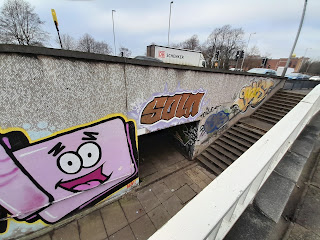

The smo crew


@skema__rsk_wsp_


The Incredible Hulk

The Predator

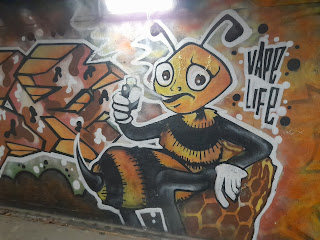


Star wars


Gremlins

2D Gorillaz


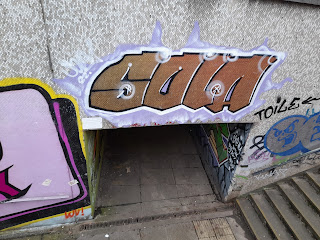
#wolverhamptongraffiti #wolvesgraffiti #blackcountrygraffiti #westmidlandsgraffiti
I like them
ReplyDeleteThank you so much
Delete