


Based in Manchester. Made in Birmingham. Tempered with Sheffield steel. Got Graffiti and street art murals from Leicester to Bristol and everywhere in between Techni Tou Dromou Its the Art of the Road. Dedicated to documenting UK Graffiti and Street-Art Murals! @technitoudromou #technitoudromou #artoftheroad #streetart #mural #graffitiphotography #graffitiart #graffiti #urbangraffiti #urbanstreetart


Concrete Canvas Street Art Sheffield
Amazing street art murals Sheffield canal
Big thanks to @canalrivertrust & @montana.nottingham for making it happen




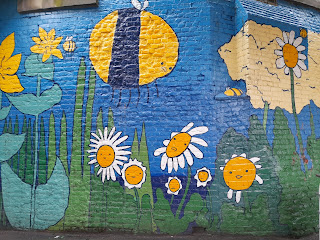
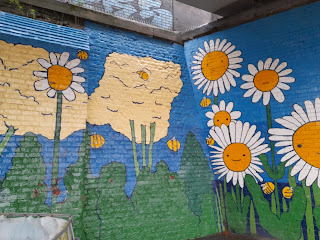
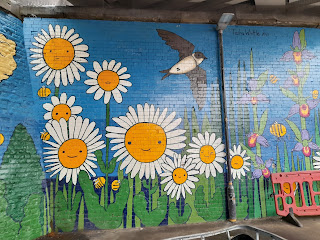

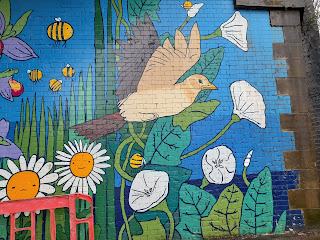


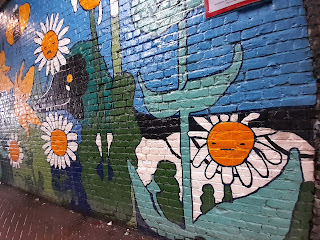


Beneath the movement of trams and traffic in Manchester, the Cornbrook Tram Station underpass has been transformed into a vivid celebration of nature, memory, and overlooked history through a large-scale mural created by Manchester artist Tasha Whittle. Commissioned by Glenbrook and supported by Castlefield Gallery, the mural reimagines one of the busiest transport spaces on the Metrolink network as a living landscape filled with birds, flowers, and references to the hidden ecological history of the area.
Cornbrook is a place that thousands of commuters pass through every week, yet few stop to think about the origins of its name or the history buried beneath the surrounding roads, railway lines, and industrial development. The station itself takes its name from the Corn Brook, a tributary of the River Irwell that once flowed openly through the district before eventually being culverted and hidden beneath the city. Like many waterways in industrial Manchester, the brook disappeared beneath concrete and urban expansion, becoming largely invisible to the modern landscape.
Whittle’s mural reconnects the underpass with that forgotten natural history. Rather than treating the walls as merely decorative surfaces, she transforms them into reminders that nature continues to exist beneath and around the city, even within heavily urbanised environments. Her work suggests that underneath Manchester’s roads, tramlines, warehouses, and apartment blocks, traces of older ecosystems remain alive.
The mural also draws inspiration from the remarkable history of Pomona Gardens, once located on the same site. During the nineteenth century, this area was far removed from the industrial landscape people associate with modern Cornbrook. Known also as the Cornbrook Strawberry Gardens, Pomona Gardens functioned as a public pleasure ground filled with botanical attractions, gardens, entertainment spaces, and social venues. Purchased and developed by James Reilly in 1868, the grounds became a place of recreation and escape for Manchester residents during the height of the industrial era.
Pomona Gardens contained features such as the Royal Pomona Palace and extensive botanical displays, offering visitors a contrast to the smoke, noise, and crowded conditions of industrial Manchester. In many ways, it represented Victorian society’s fascination with nature, leisure, and spectacle. However, like much of Manchester’s nineteenth-century landscape, the gardens eventually disappeared as industrial infrastructure expanded. By the 1880s, the land was acquired for the extension of the Manchester docks, and the pleasure gardens vanished beneath commercial and industrial development.
Whittle’s mural acts almost like a visual resurrection of that lost environment. The design enlarges natural forms, creating oversized flowers and birds that dominate the underpass walls. This manipulation of scale gives the impression that nature is reclaiming the concrete space around the tram station. Instead of the city overpowering the natural world, the mural reverses the relationship, allowing birds, plants, and wildflowers to become monumental presences within the urban landscape.
The wildlife featured throughout the mural reflects species that can genuinely still be found in the area today. Lapwings, skylarks, dunnocks, and bullfinches appear hidden among flowering plants and meadows. These birds connect the mural directly to the ecological reality of modern Manchester rather than presenting an entirely imaginary landscape. Their inclusion reminds viewers that wildlife continues to survive even in environments dominated by transport infrastructure and urban expansion.
The flowers woven through the mural are equally significant. Meadowsweet, yellow-wort, bindweed, and bee orchids create dense layers of vegetation across the walls. The exotic appearance of the bee orchid contrasts beautifully with the harsh concrete surfaces of the underpass, reinforcing Whittle’s fascination with unexpected encounters between nature and urban space. Among these plants appear her signature smiling oxeye daisies, which bring warmth, humour, and emotional energy into the composition.
One of the central ideas behind the project is the concept of wildlife corridors. While humans often divide landscapes with roads, railways, buildings, and industrial zones, many species continue navigating through these fragmented environments using small connected habitats and pathways. Whittle became inspired by the idea that spaces like railway embankments, canals, wasteland, and overgrown edges of transport routes can function as vital ecological corridors for birds, insects, and plants.
This ecological perspective gives the mural a deeper significance beyond aesthetics alone. The artwork becomes a reminder that humans are not separate from nature but exist within delicate ecosystems that sustain all life. Whittle’s imagery suggests that even heavily developed urban environments remain interconnected with the natural world. Without these ecosystems, cities themselves would become lifeless and unsustainable.
Visually, the mural transforms the atmosphere of the Cornbrook underpass completely. Transport underpasses are often associated with darkness, noise, and transience — spaces people move through quickly without emotional connection. Whittle’s work interrupts that routine. The explosion of colour, enlarged organic forms, and hidden creatures encourages people to slow down and observe their surroundings differently. Commuters passing through the station encounter something imaginative and unexpectedly alive within an otherwise functional environment.
The project also reflects Manchester’s growing embrace of public art as part of urban regeneration. Across the city, murals and large-scale artworks increasingly appear on buildings, underpasses, and public spaces, helping redefine former industrial areas through creativity and visual culture. Cornbrook itself has undergone significant redevelopment in recent years, with new residential buildings and infrastructure reshaping the district. The mural contributes to this transformation while preserving a connection to the site’s hidden history and ecology.
As an artist, Tasha Whittle’s wider practice makes her particularly suited to such a project. A graduate of Manchester School of Art with a BA in Illustration and Animation, her work moves fluidly between mural painting, drawing, screen printing, installations, and interactive sculpture. Throughout her projects, she repeatedly explores relationships between people, place, emotion, and ecology.
Her visual style combines biophilia, anthropomorphic imagery, and bold colour palettes to create environments where nature feels emotionally present and active. Plants and animals within her work often appear expressive, joyful, and almost sentient, as though reclaiming visibility within urban environments that normally ignore them. This distinctive approach has made her one of Manchester’s most recognisable contemporary mural artists.
Whittle is also founder of Outhouse, an outdoor public art project space based around Manchester’s Northern Quarter. Through this initiative and numerous commissions for organisations including Manchester International Festival, Rochdale Borough Council, and Manchester City Football Club, she has contributed significantly to the city’s contemporary public art landscape.
The Cornbrook Tram Station mural stands as one of her most ambitious public works. It succeeds not only because of its technical quality and visual richness, but because it reconnects a modern transport space with forgotten histories, buried waterways, vanished gardens, and the resilient ecosystems still surviving within the city. In doing so, the mural transforms an ordinary underpass into a place of reflection, colour, and living memory.


