
# Flamingo on Peacock Street Art Mural Bristol
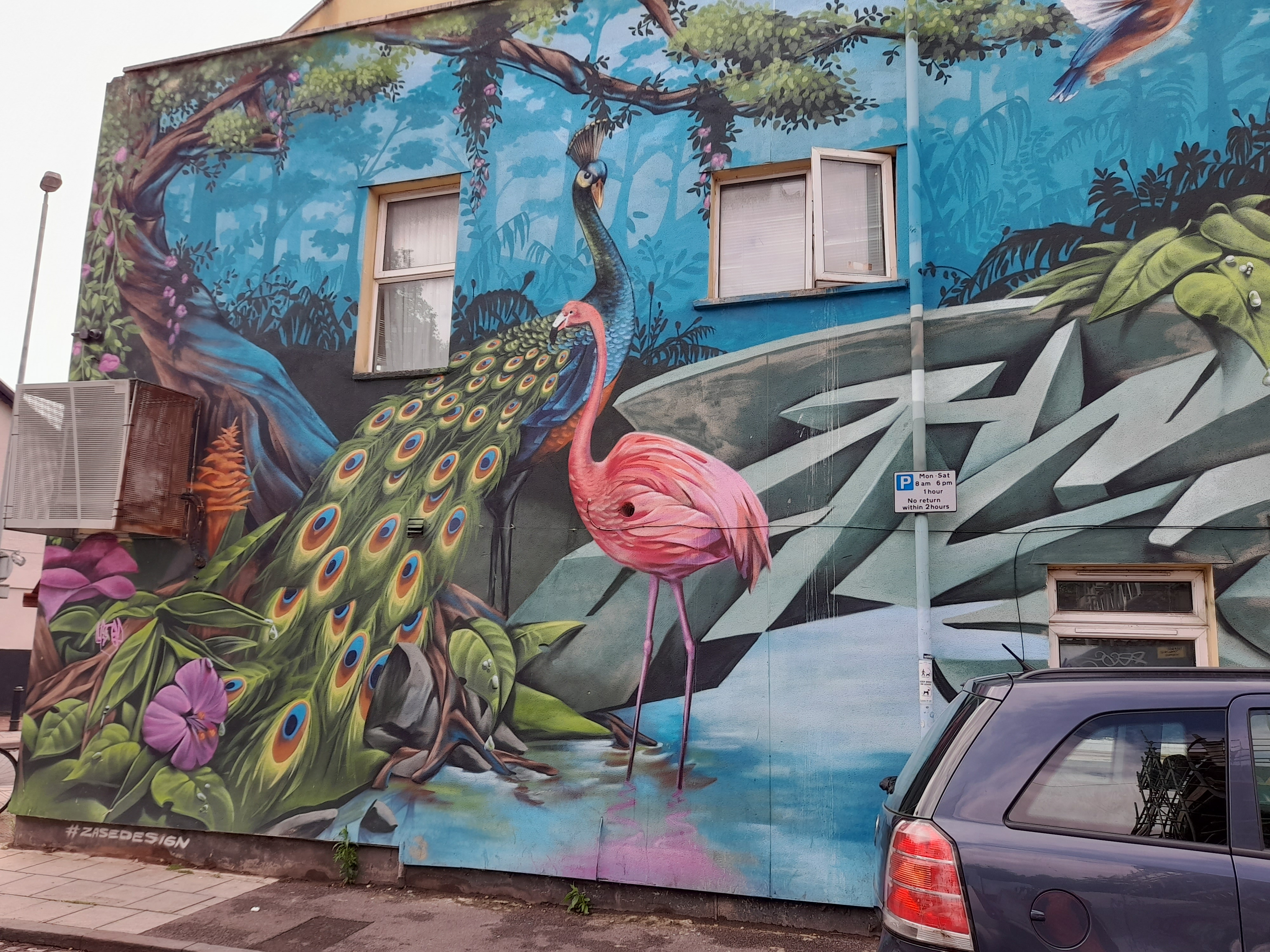
Among the countless murals, tags, paste-ups, and large-scale productions that cover the walls of Bristol, some pieces stand out not only because of their technical quality but because of the atmosphere they create within the streets around them. Bristol has long been known as one of the great centres of street art culture in the United Kingdom, a city where neglected brick walls can suddenly become enormous canvases bursting with colour, imagination, and personality. Hidden among industrial roads, side streets, old warehouses, and residential areas are artworks that transform ordinary urban spaces into living galleries. One of the finest examples of this spirit is the flamingo mural by Zase and Dekor on Mina Road.
Large commissioned murals always create excitement in Bristol because they bring something different from the quick throw-ups and temporary pieces that often dominate street art culture. They represent a longer-term vision for an area and show what can happen when building owners actively support artists rather than seeing graffiti only as vandalism. In the case of the Mina Road mural, the commission reflects the growing understanding that public art can completely change the feel of a neighbourhood. Without people willing to invest in these projects, many streets would remain visually lifeless, made up only of blank concrete, weathered brick, and fading industrial surfaces.
The flamingo mural immediately captures attention because of its sheer scale and vivid colour palette. Flamingos already possess an almost surreal appearance in nature, with their exaggerated proportions, curved necks, long legs, and bright pink feathers. They look as though they were designed specifically for visual art. Street artists seem repeatedly drawn to flamingos because they naturally combine elegance with strangeness. Their intense colours stand out brilliantly against urban backgrounds, especially in cities dominated by grey skies and industrial architecture. In Bristol, where murals often compete visually with one another, the flamingo succeeds because it feels alive against the wall rather than simply painted onto it.
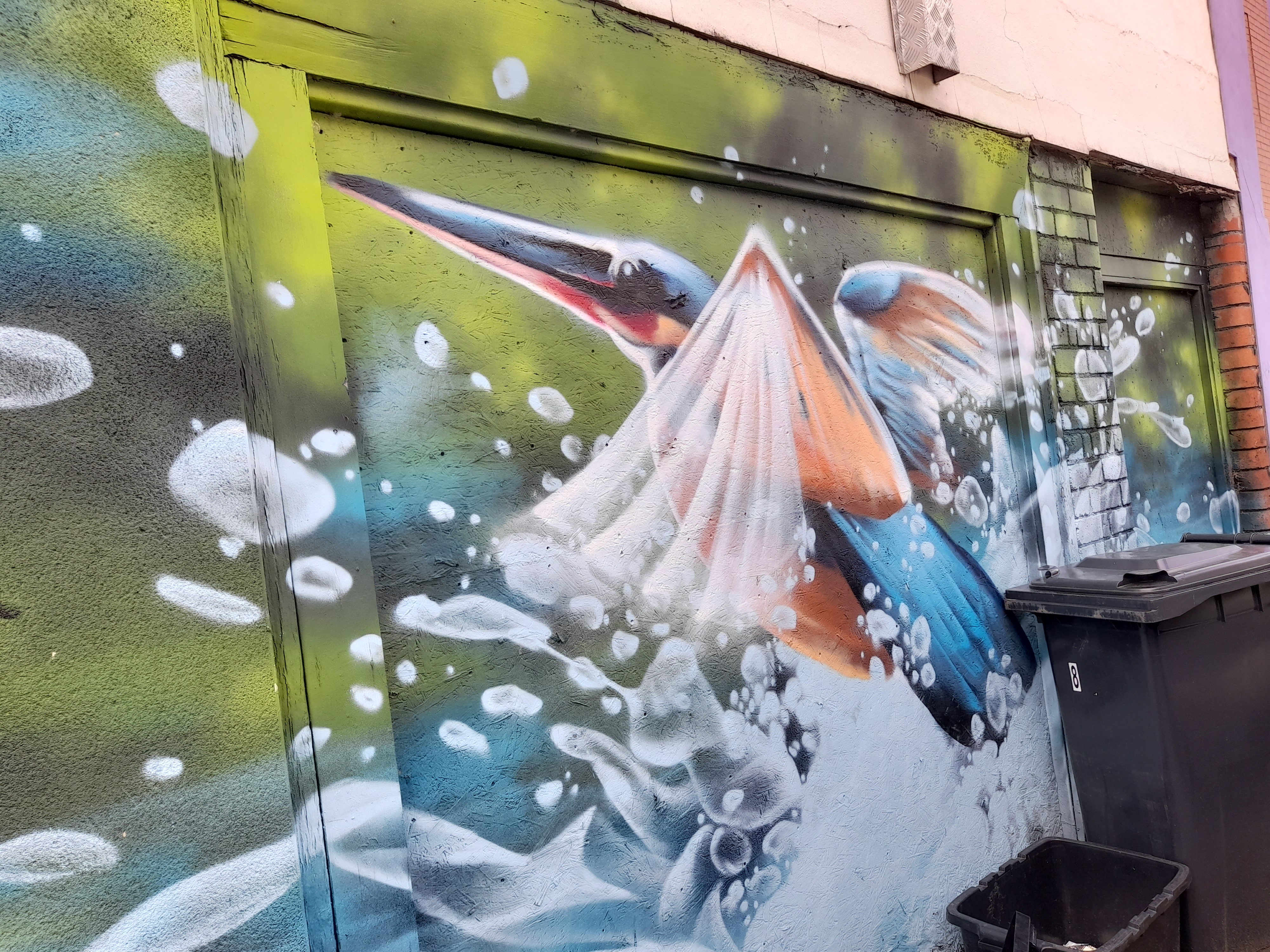
The mural showcases the talent of Zase, whose work frequently returns to themes from the natural world. Birds, animals, foliage, and organic landscapes appear again and again throughout his artwork, creating a contrast between nature and the built environment. On Mina Road, the flamingo becomes almost symbolic, like a tropical vision emerging unexpectedly from an industrial street in Bristol. There is a sense of escape within the painting, as though the wall opens briefly into another world filled with colour and movement.
One of the most impressive elements of the mural is the technical detail. The feathers contain subtle shading and layering that give the bird a realistic texture while still preserving the stylised energy associated with street art. The curved neck and poised stance of the flamingo create a graceful flow across the wall, leading the eye naturally through the composition. Behind the bird, the surrounding landscape adds depth without overwhelming the main subject. The mural balances realism and abstraction in a way that feels both contemporary and timeless.
The piece also contains the trademark three-dimensional moniker associated with Zase’s work. This signature style has become instantly recognisable within Bristol’s street art scene. Rather than simply signing the mural with flat lettering, the moniker becomes part of the composition itself, almost sculptural in appearance. It reinforces the identity of the artist while adding another layer of visual interest to the wall. For followers of Bristol graffiti and mural culture, details like this matter because they connect individual works into a wider artistic journey across the city.
Although the mural is primarily associated with Zase, it also reflects the creative partnership that existed between Zase and Dekor. Their collaborations helped shape a distinctive style known for strong colour combinations, dynamic forms, and a fascination with natural imagery. Reports suggest that Dekor later returned to his homeland, possibly Slovakia, leaving this mural as one of the memorable reminders of their shared artistic influence in Bristol. Partnerships like these are common within graffiti and street art culture, where artists often evolve together, pushing each other technically and creatively before eventually taking separate paths.
The importance of the Mina Road mural goes beyond aesthetics. Public artworks of this size contribute to the identity of an area. Streets that might otherwise be overlooked suddenly become destinations for photographers, artists, and visitors exploring Bristol’s famous street art landscape. Murals create landmarks. They become points of memory within the city. People arrange meetings near them, photograph them repeatedly through changing weather and seasons, and gradually associate entire neighbourhoods with particular artworks.
Bristol has a long tradition of this transformation through art. From the internationally recognised works connected with Banksy to the huge festivals and legal walls spread across the city, street art has become woven into Bristol’s cultural identity. Yet smaller or lesser-known murals like the flamingo on Mina Road often carry just as much emotional power because they emerge organically within everyday spaces rather than tourist centres. Discovering a mural unexpectedly while walking through an industrial street creates a feeling completely different from visiting a gallery. The artwork belongs to the environment and changes how people experience that environment.
Another reason the flamingo mural resonates so strongly is because of its optimistic energy. Much urban art leans heavily into political anger, dystopian imagery, or aggressive lettering styles. While those traditions remain important parts of graffiti culture, the Mina Road flamingo offers something calmer and more uplifting. The bright colours and natural imagery soften the harshness of the surrounding architecture. The mural reminds viewers that beauty can exist in places usually associated with traffic, warehouses, and neglected industrial space.
There is also something uniquely Bristolian about the mural’s existence. Bristol has always embraced creative experimentation and independent artistic culture. Murals are not treated as rare novelties but as living parts of the city’s visual identity. Residents often speak about street art with the same pride other cities reserve for historic monuments. The willingness of property owners to commission artists reflects this broader cultural acceptance. In many cities, walls remain empty out of fear of graffiti. In Bristol, walls become opportunities.
The flamingo mural on Mina Road stands as a perfect example of how street art can elevate public space into something memorable and emotionally engaging. It combines technical skill, vibrant colour, natural imagery, and urban atmosphere into a single composition that feels completely at home within Bristol’s creative landscape. Whether viewed by dedicated street art enthusiasts or by someone simply passing through the area, the mural leaves a lasting impression.
Well worth the trip to see in person, the flamingo continues to brighten Mina Road, proving once again that a painted wall can transform not only a building but the mood and identity of an entire street.





Zase
A beautiful commission mural by Zase on the front and side of a recently refurbished restaurant
#bristolgraff #bristolgraffiti #streetartbristol #bristolstreetart #Upfest
Ok
ReplyDeleteThank you
Delete